Child Therapy in Irvine
for Emotional Growth
Your Child’s Behavior Has a Story
Children do not always know how to explain what they feel. Instead, their emotions often show up through behavior, withdrawal, anxiety, anger, clinginess, school struggles, sleep problems, or sudden changes at home.
Child therapy helps look beneath the surface of those behaviors. Rather than asking, “What’s wrong with my child?” therapy creates space to understand what your child may be trying to communicate emotionally.
At Irvine Family Counseling, child therapy is designed to help children feel safer, more understood, and better supported as they work through difficult feelings, family stress, developmental changes, and internal conflicts.
Signs Your Child May Need Support
- Frequent emotional meltdowns
- Anxiety or constant worry
- School avoidance or stress
- Trouble sleeping alone
- Anger or defiance
- Big reactions to small things
- Withdrawal from family or friends
- Difficulty with transitions
- Low confidence or sadness
- Stress after family changes
Why Families Choose IFC
Choosing child therapy can feel vulnerable for parents. You may be wondering whether your child’s behavior is “normal,” whether things will get better on their own, or whether therapy is really the right next step.
At Irvine Family Counseling, our thoughtful clinical team works with children and families in a warm, emotionally grounded way. We do not treat your child like a problem to be fixed. We work to understand their inner world, emotional needs, family relationships, and developmental stage.
Our Irvine office is conveniently located near the Irvine Spectrum, with easy access from the 5, 405, and 133 freeways for families throughout Irvine and Orange County.

Emotionally attuned child therapy
Support for children and parents
Psychodynamically informed care
Warm, relationship-focused clinicians
Thoughtful family communication support
A calm space for difficult emotions
When Child Therapy May Make Sense
Child therapy may be helpful when your child’s emotions, behavior, or stress patterns are starting to affect daily life, school, friendships, sleep, or the family system. You do not have to wait until things feel extreme. Sometimes therapy is most helpful when parents notice a pattern that keeps repeating and want support understanding what is underneath it.
Your child’s emotions feel bigger than they can manage alone
School, friendships, or home life are becoming more difficult
Your child has trouble talking about what they feel
Family stress or change is affecting your child’s behavior
You want support understanding your child more clearly
You feel unsure how to respond without escalating things
Child therapy helps children express emotions, understand themselves, build coping skills, and work through stress in a safe therapeutic relationship. It also helps parents better understand what their child may be communicating through behavior, anxiety, withdrawal, anger, or emotional overwhelm.
How Child Therapy Works

Early sessions help the therapist understand your child’s emotional world, family context, developmental needs, behavior patterns, and what may be contributing to the current concerns.

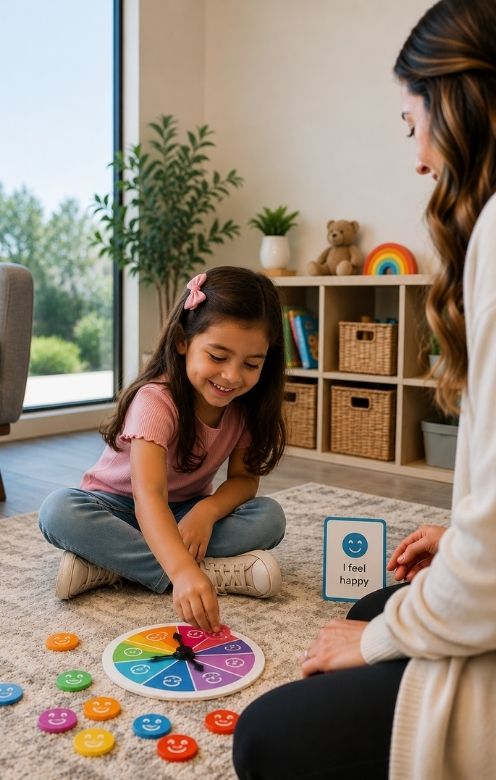
Depending on age and needs, therapy may include talking, play, creative expression, emotional reflection, and supportive activities that help children communicate more safely.

Child therapy often includes parent guidance so caregivers can better understand patterns, respond with more confidence, and support emotional growth outside the therapy room.
Irvine Family Counseling provides child therapy for families throughout Irvine and Orange County who want thoughtful, emotionally grounded support for their child’s growth and well-being.
What to Expect in Child Therapy
The first sessions are usually focused on helping your child feel comfortable and helping the therapist understand what has been happening at home, school, or socially.
For younger children, therapy may include play, drawing, storytelling, or other age-appropriate ways of expressing feelings. For older children, sessions may include more conversation, emotional reflection, coping tools, and support around specific challenges.
Parents may be included at different points depending on the child’s age, needs, and treatment goals. The process is meant to feel supportive, not blaming. The goal is to help your child feel understood while helping you feel less alone as a parent.
You have questions, we have answers
Child therapy is counseling designed to help children express emotions, understand their feelings, and work through challenges they may not be able to explain clearly. It can support children dealing with anxiety, sadness, behavior changes, school stress, family transitions, or emotional overwhelm.
Your child may benefit from therapy if you notice repeated emotional meltdowns, anxiety, withdrawal, sleep issues, school struggles, anger, sadness, or behavior changes that do not seem to improve. Therapy can help identify what may be underneath those patterns.
Child therapy can support younger children, school-age children, and preteens. The approach depends on the child’s age, personality, emotional needs, and ability to express themselves. Younger children may use play or creative expression, while older children may engage more through conversation.
Parents are often an important part of the process. While children need a safe space of their own, parent involvement can help improve understanding, communication, and support at home. The level of involvement depends on your child’s age, needs, and treatment goals.
Yes, child therapy can help children who struggle with worry, separation anxiety, school anxiety, fears, perfectionism, or emotional overwhelm. Therapy helps children understand what they feel, develop coping skills, and feel more supported by the adults around them.
No. Child therapy is not only for crisis situations. Many families seek therapy when they notice ongoing stress, emotional changes, behavior struggles, or family transitions. Getting support earlier can help children and parents better understand what is happening before patterns become more difficult.
Child therapy focuses primarily on the child’s emotional experience, while family therapy focuses more directly on the family system and relationship patterns. Sometimes both may be helpful, especially when a child’s struggles are connected to communication, conflict, or changes within the family.
You can start by contacting Irvine Family Counseling to schedule a consultation. The first step is to share what has been happening, what concerns you most, and what kind of support your child or family may need.